_piscina.BSDuopYr_Z1uu99F.webp)
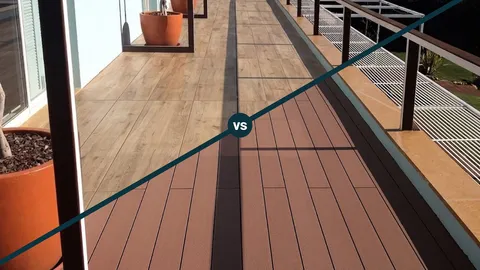
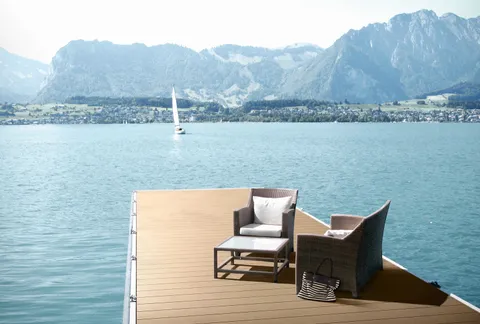
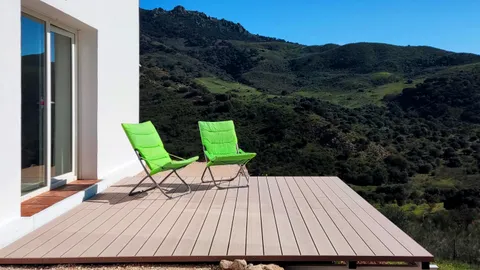
Wood decking and composite decking share the same warm, inviting look, but they behave very differently over the years. In this article, we compare the two on the criteria that matter most when deciding, introduce the types of wood most commonly used in Portugal and help you choose according to your priorities.
Wood decking and composite decking: what they are
Wood decking
Natural wood boards fixed to a support structure, usually also made of wood. Options range from treated pine, the most economical choice, to exotic hardwoods such as garapa, cumaru, ipe or teak.
CDECK composite decking
Boards made from a composite of wood fibres and PVC, recreating the look of natural wood. They are fixed with the Quick-Fix® system onto PVC or aluminium joists.
Wood or composite: a side-by-side comparison
| Criterion | Wood decking | CDECK composite decking |
|---|---|---|
| Looks | Unique grain in every piece. Changes colour over time if left untreated. Boards usually between 1.5 and 2 m long. | A range of colours and finishes that recreate the look of wood. Boards of 2.3 m or made to measure, between 1.8 and 3 m. |
| Safety | Slip-resistant when new. Over time it can splinter and crack. | Class 3 slip resistance (EN 15534), even when wet. No knots or splinters. |
| Durability | Without proper maintenance it can crack, warp, rot and be attacked by insects. | Does not rot, crack or suffer insect attack. |
| Maintenance | Treatment every year or every two years: sanding, oil, varnish or sealant. | Cleaning with water and a neutral detergent. No varnishes, oils or paint. |
| Installation | Traditional fixing systems, which take longer. Boards cannot be removed individually. | Quick-Fix® system, with just one screw per board. Each board can be removed individually. |
| Cost over time | Exotic hardwoods have a high upfront cost. With every type, treatment adds costs year after year. | No annual treatment costs, making it more economical in the medium and long term. |
Common questions about composite decking
Does composite get hotter in the sun?
Yes. In strong sunshine, wood heats up less than composite. With CDECK Original®, the hollow board heats up less than the solid one, thanks to the air chambers inside.
How long does composite decking last?
A well-maintained exotic hardwood deck can last 15 to 25 years. CDECK has an estimated service life of more than 30 years, with a warranty of up to 25 years for residential use and up to 10 years for commercial use, and needs no treatment to get there.
Does composite expand in the heat?
Like wood, composite expands and contracts with changes in temperature and humidity. CDECK withstands wide temperature variations, and the installation allows for expansion gaps, specified in the technical data sheet, so that the deck stays stable.
What types of wood are used for decking?
A treated pine deck and a teak deck belong to completely different categories in terms of durability, maintenance and price. These are the most common woods on the Portuguese market.
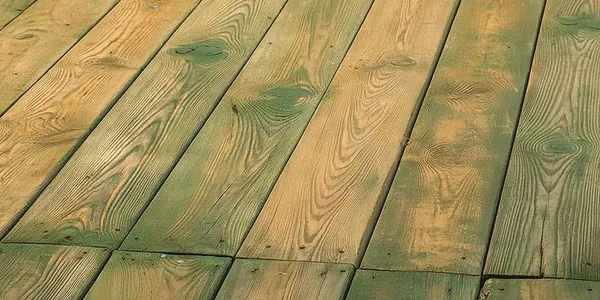
Treated pine
Pressure-impregnated with products that inhibit fungal growth and insect attack. It is the most affordable option and the least durable: it needs regular painting or varnishing, changes colour and tends to splinter and crack.
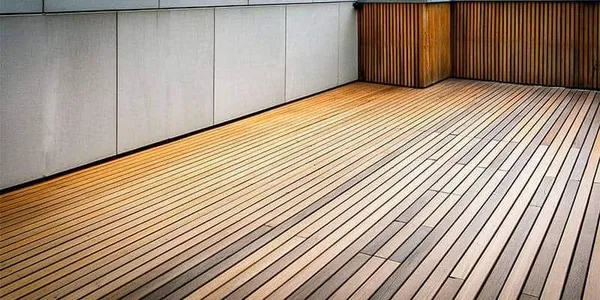
Garapa
Mid-range quality, more durable than treated pine. It is naturally resistant to rot and insects and has a golden hue that darkens over time. The colour fades without maintenance, and its hardness and weight make installation demanding.
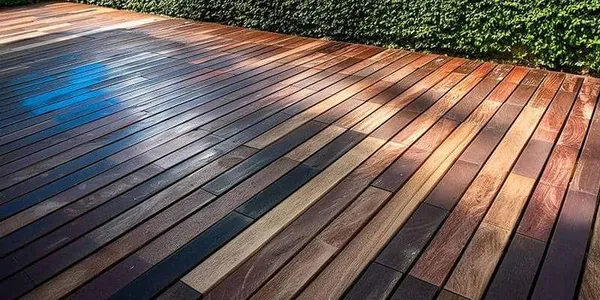
Cumaru
A dense South American hardwood, ranging from golden yellow to reddish brown, naturally resistant to fungi, insects and rot. It is heavy and difficult to install, its colour varies considerably between batches and it turns grey without maintenance.
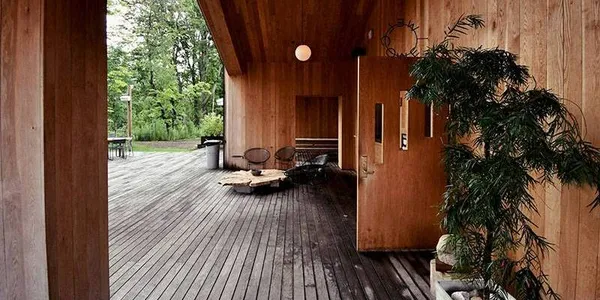
Ipe
One of the most prestigious woods for decking, very dense and rich in natural oils, with a dark brown colour. With proper maintenance it can last more than 25 years. It is very expensive, difficult to install and needs regular oiling or sealing to keep its colour.
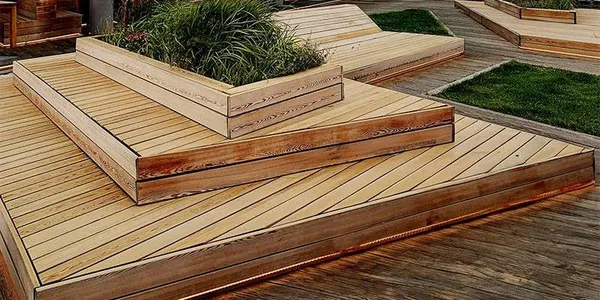
Teak
The most premium wood for decking. It stands up well to water and salt and offers superior stability, making it well suited to swimming pools and coastal areas. It is the most expensive on the market, it is heavy and, without regular treatment, it takes on a silvery grey tone.
Can I replace my wood decking with composite decking?
Yes. The old deck is removed and CDECK is installed with the Quick-Fix® system, which adapts to different bases: a concrete slab, existing flooring or surfaces that cannot be drilled. The best solution depends on the base you have, and our team can help you choose.
Get in touchWood or composite decking: which should you choose?
Choose wood if what matters most is the unique look of natural wood and you have time to treat it every year or every two years.
Choose composite if you want the look of wood without annual maintenance, a splinter-free surface for children and pets, or a pool area that stays safe even when wet.
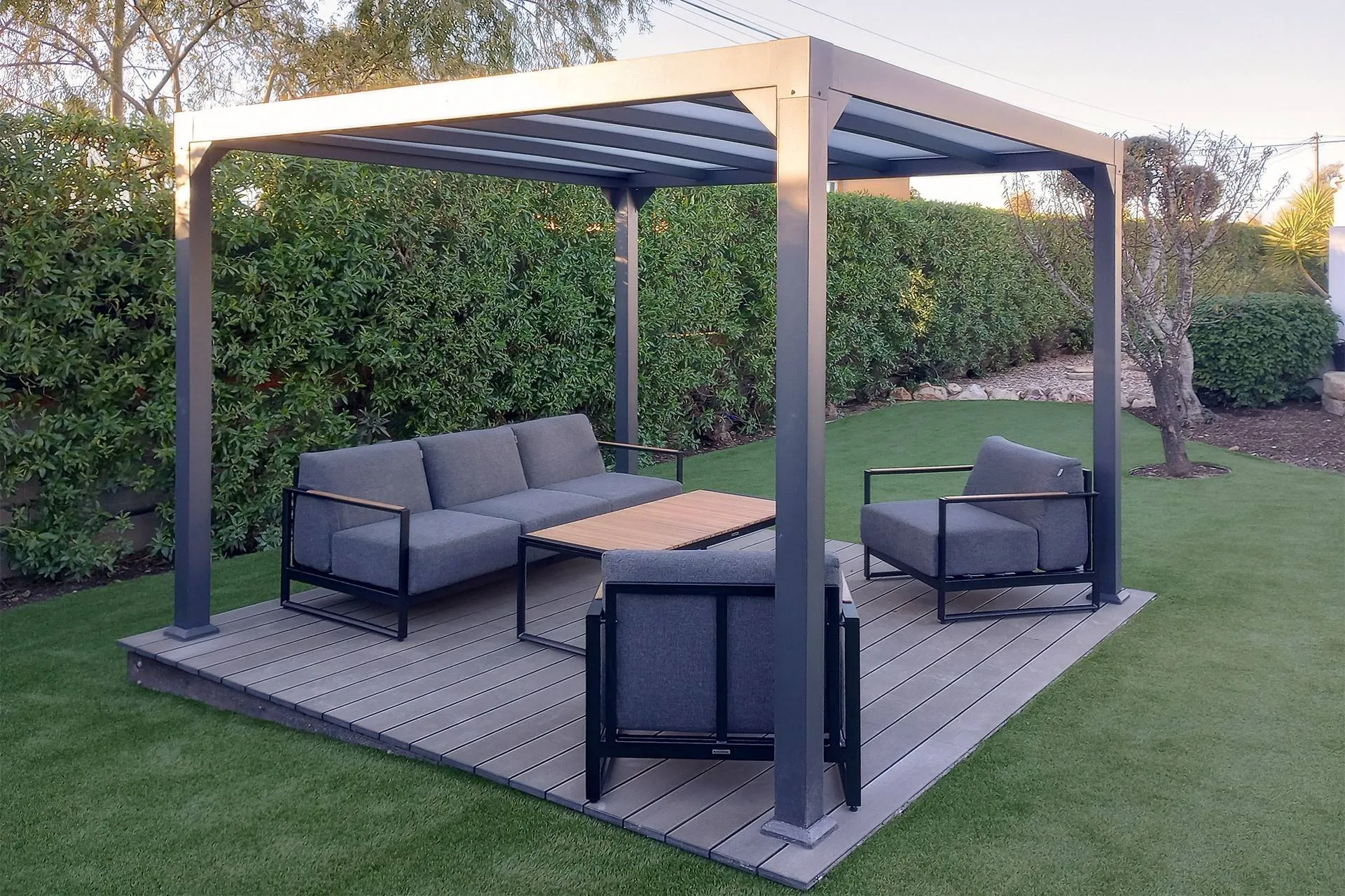
CDECK comes in two ranges: CDECK Original®, in hollow or solid boards, and CDECK WUUDE®, with a capped finish.
Simulate my deck.BcdnDcB1_lRskF.webp)