_piscina.BSDuopYr_Z1uu99F.webp)
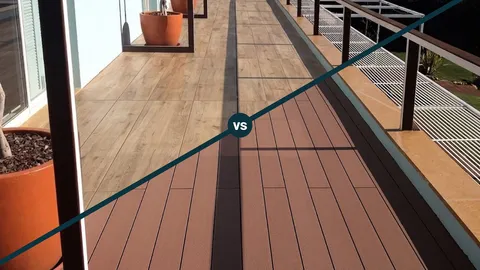
Planning a new garden deck and deciding between timber and composite? To make the right choice, it helps to compare the factors that really matter: appearance, comfort and safety, durability, maintenance, installation and cost.
For a fair comparison, we compare CDECK composite decking with premium tropical hardwoods such as ipe and teak. Treated softwoods such as pine belong to a different category and are not covered here.
What is timber decking?
An outdoor surface made from natural wood, ranging from more affordable species (treated pine) to premium hardwoods (ipe, teak). Each has its own characteristics in terms of durability, maintenance and cost. Timber is chosen above all for its natural beauty and warmth.
What is CDECK composite decking?
CDECK combines wood fibres and polymers to recreate the look of natural wood while offering greater durability and lower maintenance. Made in Europe, it comes with a warranty of up to 25 years and is installed using the patented Quick-Fix® system.
Wood or composite decking: at a glance
| Critère | Natural timber (ipe, teak) | CDECK composite decking |
|---|---|---|
| Composition | Natural wood (ipe, teak) | Wood fibres + polymers |
| Appearance | Unique grain; changes over time; generally shorter boards | Wood-effect colours and textures; long or made-to-measure boards |
| Comfort and safety | Slip-resistant; may splinter and crack over time | Slip-resistant even when wet; splinter-free; effective drainage |
| Durability | Good, but may warp, rot and be affected by insects | Will not rot or split; resistant to insects and UV |
| Maintenance | Regular: sanding, oil, varnish or protective treatment | Low: simple cleaning with water |
| Installation | Traditional, generally slower | Quick-Fix®, one screw per board |
| Cost | High initial cost + recurring maintenance | Better long-term value |
A closer comparison
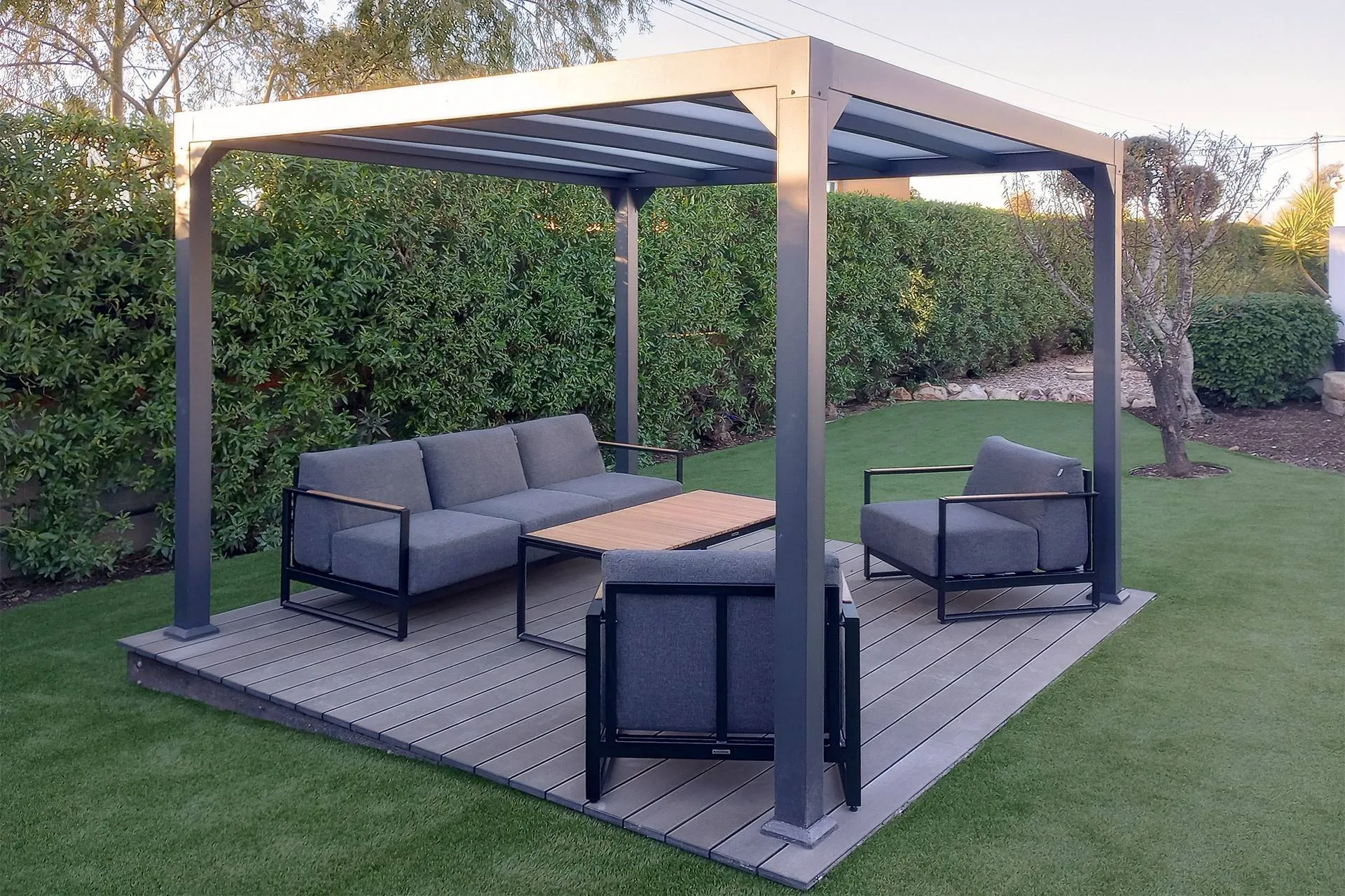
Appearance and design
Timber: every board is unique, with its own natural grain. The trade-off is that its appearance changes over time and, because timber boards are often shorter, larger decks tend to have more joints.
Composite: available in a range of colours and textures that recreate the look of wood, with long boards (2.3 m as standard or made to measure) that reduce the number of joints and create a more consistent finish. The WUUDE range takes the wood effect further, with natural colour variation from one board to the next.
Comfort and safety
Timber: naturally slip-resistant and generally a little cooler in direct sun. Over time, however, it can develop splinters and cracks, which can be uncomfortable under bare feet, particularly for children and pets.
Composite: the surface remains smooth, knot-free and splinter-free, while providing slip resistance even when wet (Class 3 under EN 15534, the highest level). Water drains away effectively without pooling.
Durability and resistance
Timber: strong and durable when properly maintained. Without regular care, moisture can cause it to swell, warp and rot, while also making it more vulnerable to insects.
Composite: it absorbs very little water, so swelling is minimal and it does not rot, and it is resistant to UV exposure and changes in temperature. This helps it retain its appearance over time, with an estimated service life of more than 30 years and a warranty of up to 25 years.
Maintenance
Timber: requires regular maintenance, including sanding and the application of oil, varnish or a protective treatment once or twice a year. Without this care, it can grey and deteriorate. That means an ongoing investment of both time and money.
Composite: no protective treatment is required. Regular cleaning with water and a mild detergent is enough. Because individual boards can be removed, cleaning or accessing the area beneath the deck remains straightforward.
Installation
Timber: generally relies on traditional fixing systems, which typically take longer to install.
Composite: the Quick-Fix® system uses just one screw per board. It can be adapted to level, uneven or non-drillable bases, can be used to raise the finished deck level, and uses a PVC or aluminium substructure.
Cost and long-term value
Timber: premium tropical hardwood has a high initial cost, with recurring maintenance costs added over the years.
Composite: can offer better value over the long term — with a comparable initial budget, the lack of ongoing treatments can make it more economical over the lifetime of the deck.
So, wood or composite?
It comes down to your priorities. If you value the natural beauty of timber and are happy to maintain it regularly, wood may be the right choice. If you want a durable deck that is easier to live with, composite is the more practical option.
Explore the CDECK composite decking ranges.BcdnDcB1_lRskF.webp)
.B41gmxyf_1VRjVy.webp)