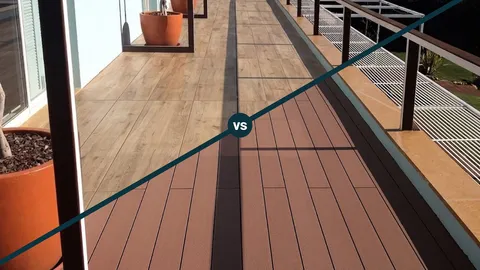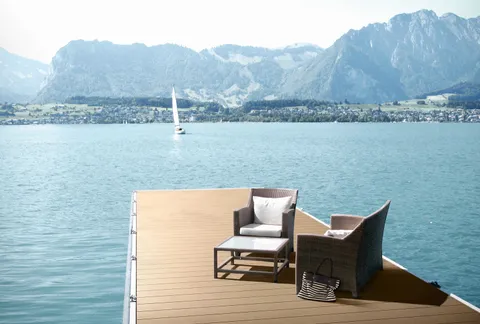

A terrace is something you choose for years to come. And the material underfoot will shape almost everything: how it copes with sun and rain, how safe it is when wet, how much time you spend maintaining it, and what it really costs over time — well beyond the price per square metre. Composite, wood, tiles, natural stone or concrete: each has its strengths and limitations. Here is how they compare.
Before you choose: what to consider
Outdoor surfaces have a lot to deal with. Keep these six criteria in mind — price per m² is only one of them.
The five materials compared
Composite decking
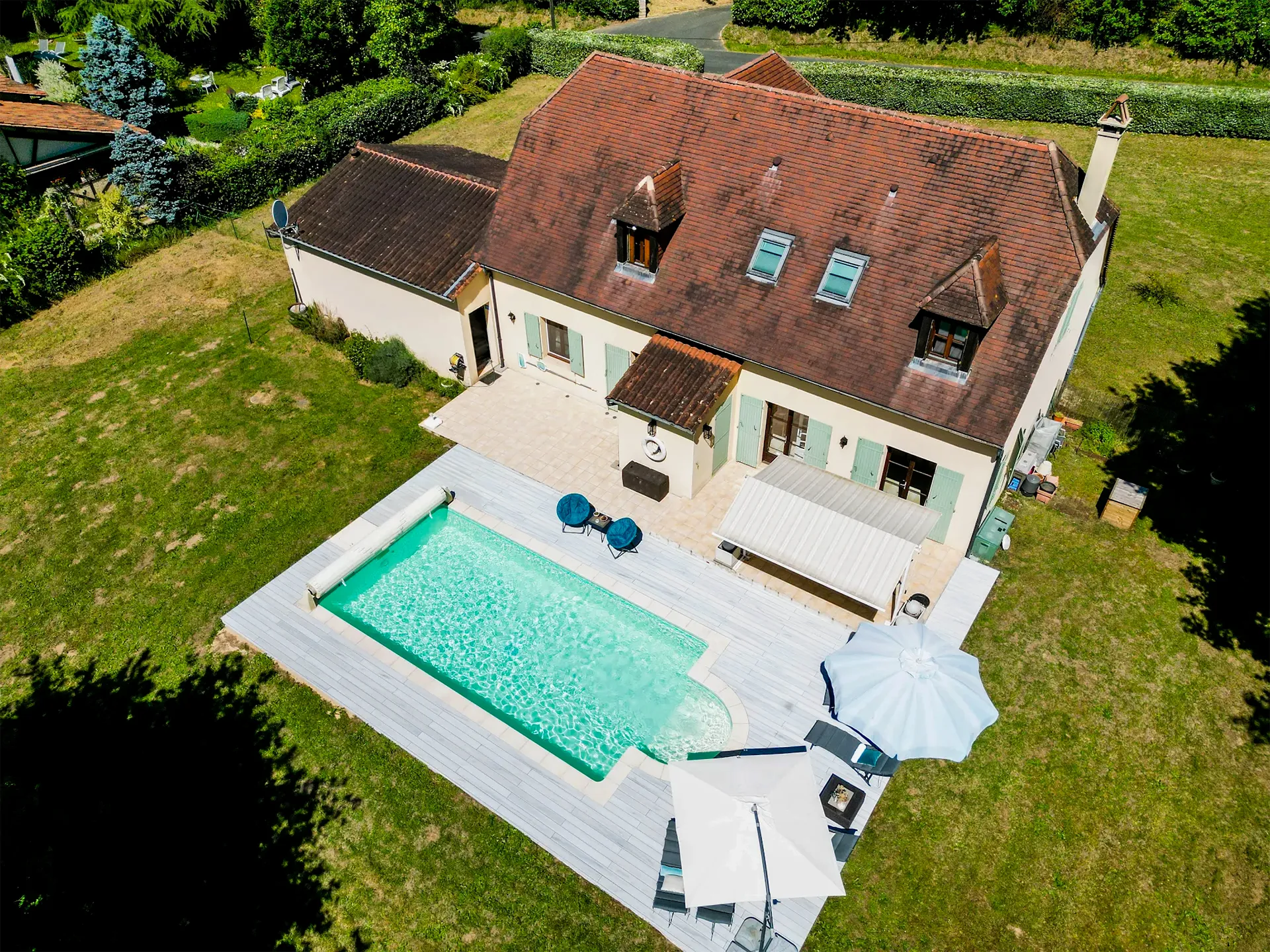
Wood fibres and polymers combined: the look of timber without the upkeep. It is an increasingly popular choice for terraces, balconies, gardens and poolside areas.
Strengths
- Very durable, with an estimated service life of more than 30 years
- Minimal maintenance: no sanding, painting or varnishing
- Slip-resistant even when wet
- Comfortable underfoot: no splinters, knots or visible screws
- Resistant to fungi, insects and termites
- Can be installed over a slab, compacted ground or a waterproofed surface
Limitations
- Higher upfront cost than tiles or concrete
- Darker colours heat up in the sun. Lighter colours and hollow boards help reduce this
- Quality varies from one brand to another, so it is worth choosing a premium composite product backed by a warranty
Best for: Terraces, balconies, gardens, poolside areas, restaurants and hotels.
Natural wood
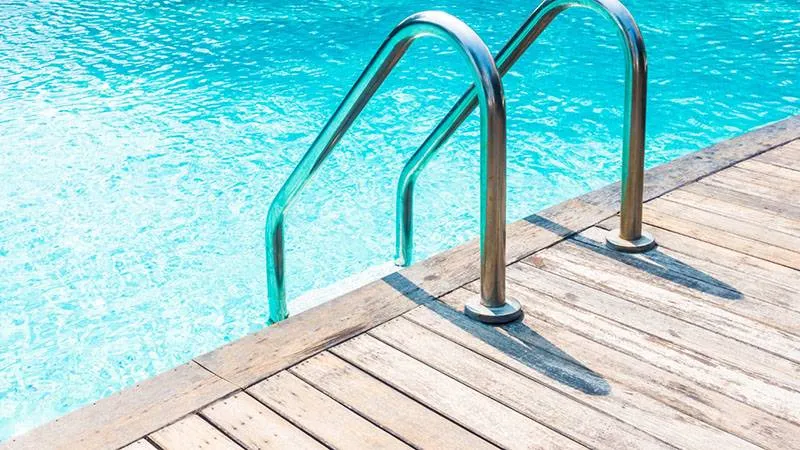
The classic choice, valued for its natural character. In France, tropical hardwoods such as ipe, cumaru and teak are especially popular because they are more resistant to moisture.
Strengths
- Natural beauty that is hard to match
- Naturally slip-resistant
- With proper maintenance, it can last for many years
Limitations
- Regular, demanding maintenance: sanding, varnish or oil once or twice a year
- Without proper care, it can rot, split, warp and splinter
- Susceptible to fungi, insects and termites
- Quality tropical hardwoods are expensive
Best for: Gardens, terraces and relaxation areas, for those happy to keep up with the maintenance.
Tiles
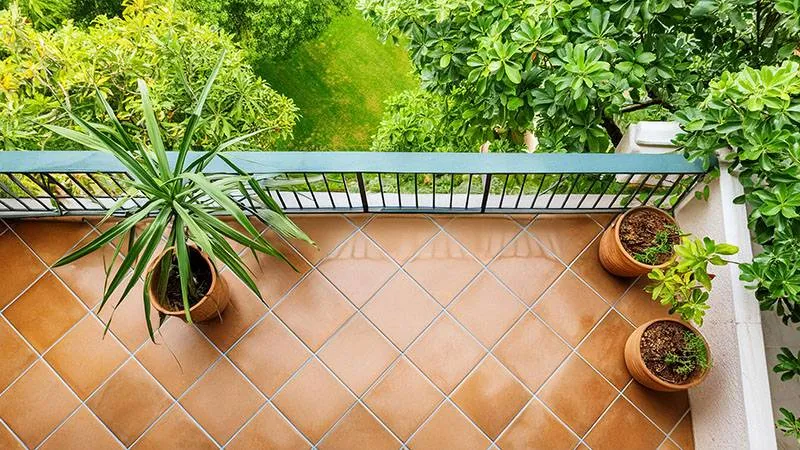
A widely used option, available in an enormous range of designs, including wood- and stone-effect finishes.
Strengths
- High resistance to abrasion and stains
- A huge choice of styles and finishes
- Easy to clean and stable over time
Limitations
- Can become slippery when wet, especially as dirt builds up
- Can crack or break under impact or significant temperature changes
- Can be uncomfortable under bare feet in very hot weather
- Grout joints become dirty and darken over time
- A level screed is usually required
Best for: Patios, covered areas and less humid spaces.
Natural stone
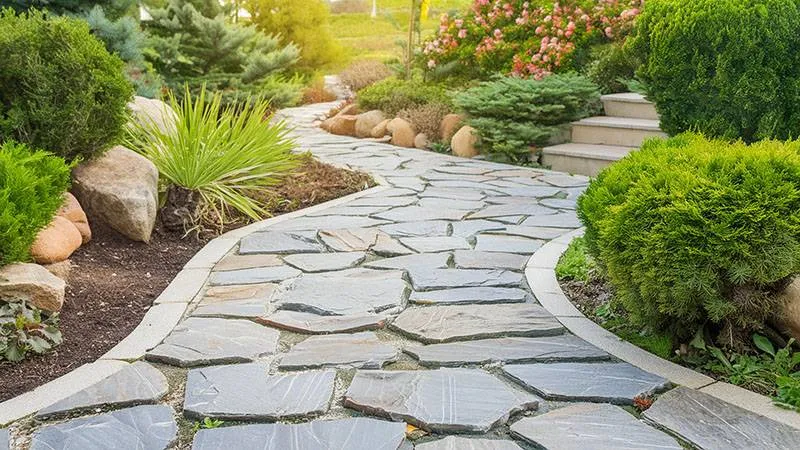
Granite, slate and limestone: a premium material valued for its natural beauty and longevity.
Strengths
- Durability measured in decades
- A premium, unique finish, with no two pieces exactly alike
- Good resistance to weathering
Limitations
- High material and installation costs, with specialist labour usually required
- The surface can be uneven and less comfortable under bare feet
- Can be slippery when wet, depending on the finish
- Its weight can limit its use on balconies and rooftops
Best for: Entrances, paths, low walls and rustic settings.
Concrete
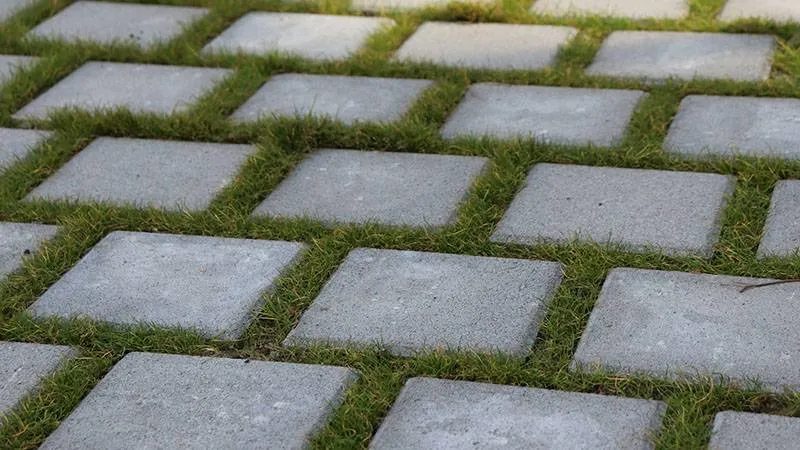
One of the most affordable and versatile options: it can be moulded, textured and coloured to imitate stone, brick or wood.
Strengths
- An accessible price point
- Plenty of design freedom — moulded, stamped or polished — combined with good durability
- Low maintenance and relatively straightforward installation over large areas
Limitations
- Cracks may develop over time
- A hard surface that retains heat and can be uncomfortable under bare feet
- Can look quite raw without an additional finish
Best for: Garages, vehicle access, utility areas and large spaces.
In practice: which one suits your project?
No material is best in every respect. It depends on how you plan to use the space and how much time you want to spend looking after it.
Our solution
CDECK composite decking
If composite is the right choice for your project, choosing the right product still matters. CDECK, manufactured in the EU by IHT, comes with a warranty of up to 25 years and an estimated service life of more than 30 years. Its safety performance is more than a claim: CDECK achieves Class 3 slip resistance, the highest classification, as stated in our Declarations of Performance. Two ranges to choose from:
.B41gmxyf_1VRjVy.webp)