Around a swimming pool, the surface you choose makes all the difference. It needs to stay safe when wet, feel comfortable under bare feet and continue to look good season after season. Wood, tiles and composite all have their strengths, and the right choice depends above all on how you plan to use the space.
The essentials
- Wood stands out for its natural character, but requires regular maintenance.
- Tiles are durable and stable, but can become slippery when wet.
- Composite combines safety, low maintenance and long-term durability around the pool.
How do you choose the right poolside surface?
Three qualities matter most around a swimming pool.
Safety
A slip-resistant surface, even when wet, that is comfortable under bare feet.
Durability
Resistance to water, UV exposure and the effects of time.
Appearance
A finish that enhances your outdoor space and continues to look good over time.
And it should remain easy to live with and straightforward to maintain.
Wood, tiles or composite: a quick comparison
A quick overview before looking at each option in more detail.
| Criterion | Wood | Tiles | Composite |
|---|---|---|---|
| Safety when wet | Variable | Slippery | Slip-resistant depending on the range |
| Maintenance | High | Low | Minimal |
| Water resistance | Sensitive; may rot | High | High; will not rot |
| Barefoot comfort | May splinter | Can get hot in the sun | Splinter-free |
| Long-term appearance | Greys over time | Stable | Does not grey, depending on the range |
Wood
It is hard to match the natural character of timber decking, with its unique grain and warmth. But with constant exposure to water, it can split, warp and become vulnerable to insects. It also requires regular maintenance, including sanding and the application of protective treatments or varnish.
Tiles
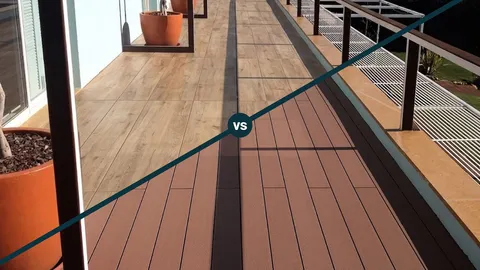
Tiles offer good abrasion resistance and a wide choice of finishes, including wood-effect designs. Their main drawback around a swimming pool is that they can become slippery when wet and may crack if the base is not perfectly level.
Composite decking
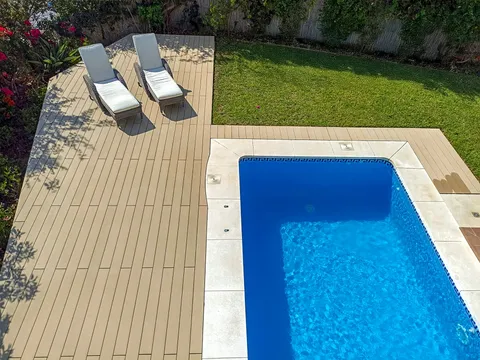
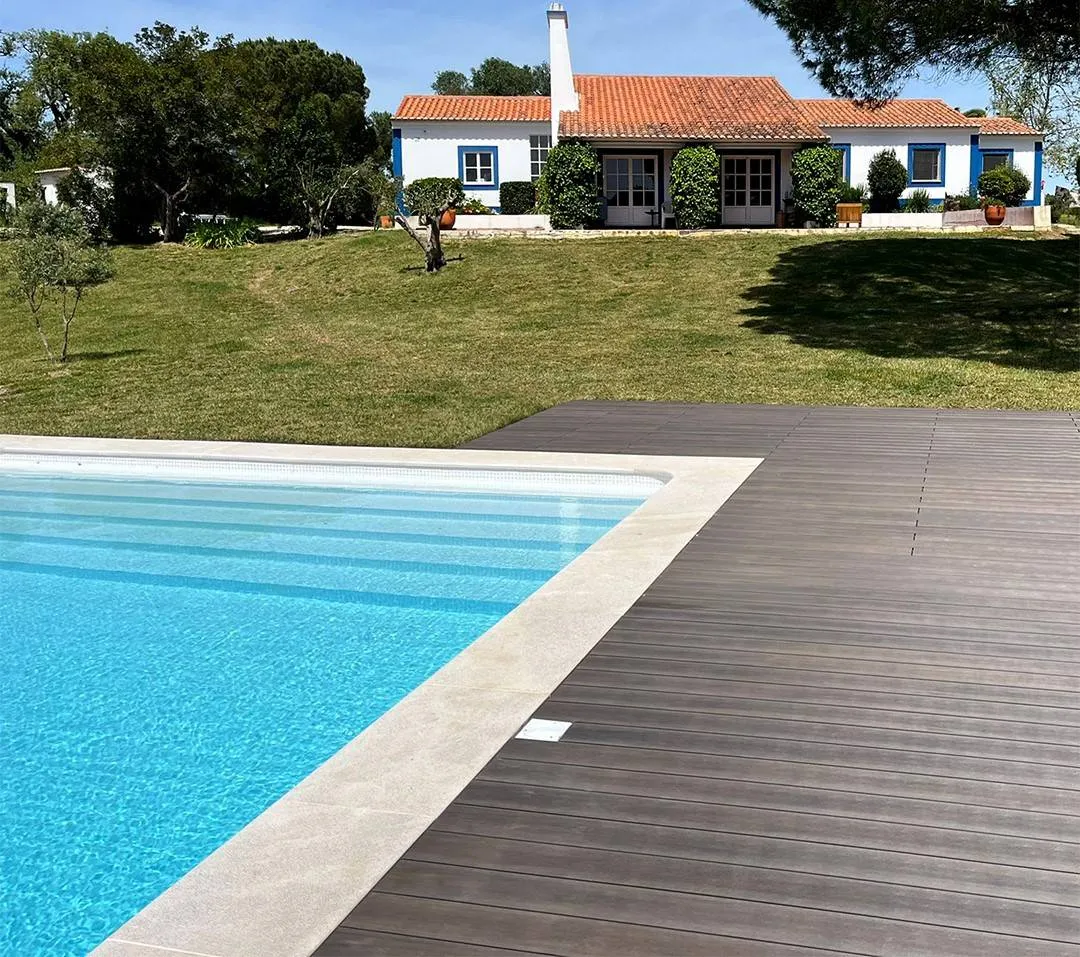
Designed to withstand water, sun and changing weather without deteriorating, composite decking is increasingly used around swimming pools.
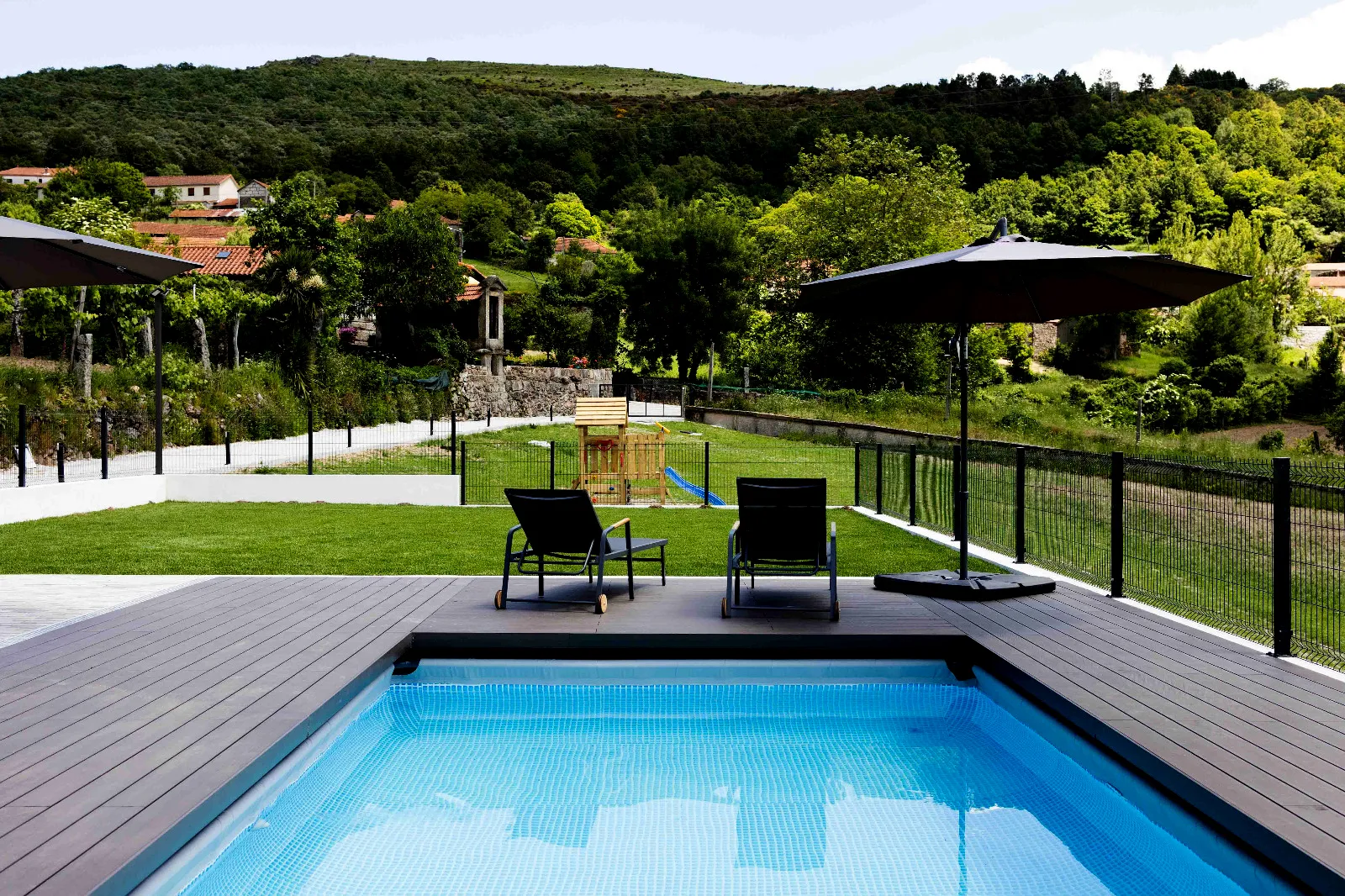
Advantages
- Highly resistant to moisture and will not rot.
- Resistant to weathering, UV, fungi and insects.
- Knot-free and splinter-free surface, comfortable under bare feet.
- Minimal maintenance, with no oil or protective treatment required.
Disadvantages
- Not all composite decking boards offer the same level of quality.
- Most are not slip-resistant, even though this is an essential consideration around a swimming pool.
The solution
CDECK composite decking
As a composite decking manufacturer, IHT designed CDECK as a high-quality product able to meet the demands of a poolside environment. It is available in two ranges.
- Class 3 slip resistance (EN 15534), with performance declared in ETA 26/0031.
- Easy to install, including as a DIY project, with detailed documentation, installation videos and support at every stage.
- Up to 25-year warranty.
- Made in the EU.